





























About Car Rush
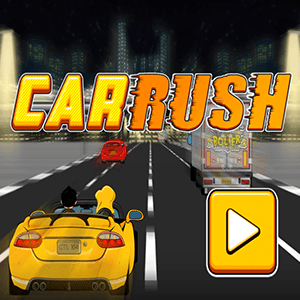
You grip the keyboard. The track stretches wide open. You floor it. For a moment, you're untouchable. Then the road twists. Your car fishtails. You overcorrect. You crash. Game over. This isn't a failure of reflexes – it's a failure of strategy. Car Rush tricks you into thinking speed is the answer. But the game is actually asking one quiet question: Are you brave enough to slow down?
Why Every Beginner Crashes at the Same Spot on Every Track
- Early tracks lull you into a false sense of security – wide roads, gentle curves, forgiving margins. You hold the Up Arrow / W and never let go.
- By Level 5, everything changes. Sharp 90-degree bends appear. Narrow bridges replace open roads. One wrong tap of Left / A or Right / D sends you spinning into the barrier.
- Most players respond by driving harder. They accelerate more aggressively into corners, hoping to "power through." Instead, they crash faster.
The universal experience is this: the more you rush, the worse your times get. You're not losing because you're slow. You're losing because you're reactive instead of proactive. Every turn becomes a surprise instead of a plan. You're driving like the track is new every time – but it isn't. The Car Rush game repeats. Your memory should be your advantage, yet panic erases it.
What Pro Players Do Differently With Their Arrow Keys That You Don't
Pro players treat Car Rush like a choreographed dance, not a chaotic scramble. Their eyes stay fixed three to four seconds ahead, scanning the track's shape before they even reach it. Their fingers on the Arrow Keys / WASD move with rhythm, not panic – they brake early with Down Arrow / S, steer smoothly with Left / A and Right / D, and only hit Up Arrow / W when the car is already pointed straight. They never steer and accelpanic - they same time. They st the arrowary action: brake, turn, then gas. That sequence, repeated perfectly, is what separates a clean lap from a wreck.
The Hidden Physics Rule That Changes How You Play Car Rush Forever
Car Rush secretly operates on a traction budget – your tires can only handle so much. If you turn and accelerate simultaneously, you overspend that budget and lose grip instantly. The game rewards a simple rule: brake in a straight line, coast through the turn, then accelerate out. This "slow-in, fast-out" geometry shaves full seconds off your time. Also, the track never changes – memorization is your hidden weapon. After a few runs, your brain starts predicting every curve, and your fingers on the WASD keys stop thinking and start flowing. That flow state is where personal bests are born.
Real Run Data Proves Slowing Down Gets You Faster Finish Times In Car Rush
- Run the same track twice – hold Up Arrow / W constantly on the first run, brake early on the second. The second run is always faster.
- Top leaderboard scores belong to players with the fewest crashes, not the highest speed.
- One slip – one overcorrected turn or mistimed brake – ruins your entire lap. No second chances.
- Fastest laps feel slower. No screeching, no panic – just smooth, controlled inputs.
- The "slow-in, fast-out" line (brake early, hit the apex, accelerate out) beats late braking every time.